Verification as Vocation: The Hidden Career Costs Embedded in Science's Reproducibility Reckoning
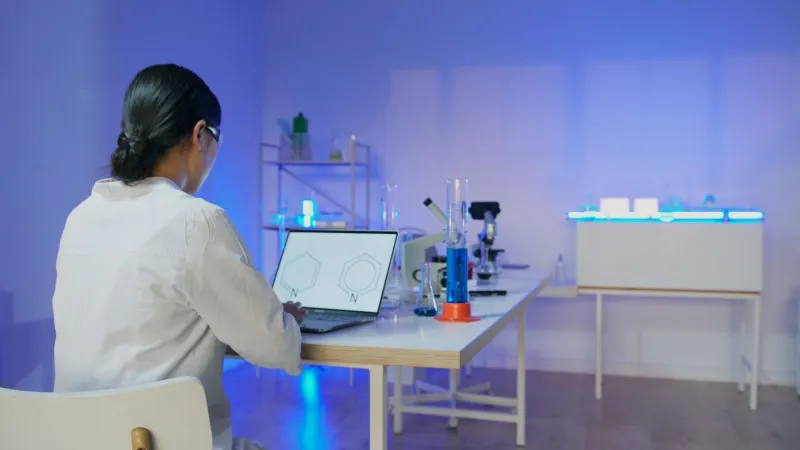
In the competitive ecology of academic science, time is among the scarcest resources a researcher possesses. Graduate students and postdoctoral fellows operate within narrow windows—typically four to seven years—during which they are expected to produce original findings compelling enough to launch independent careers. Yet a growing body of evidence suggests that a meaningful and underappreciated fraction of that window is now consumed not by discovery, but by the painstaking work of determining whether someone else's discovery was real in the first place.
This is what might be called the replication tax: an informal but structurally enforced levy on early-career researchers who find themselves drafted into reproducibility work, often without the recognition, funding, or career credit that novel research commands. Understanding how this tax accumulates—and what it ultimately costs the broader scientific enterprise—requires examining the institutional incentives that created it.
The Scope of an Underacknowledged Problem
The reproducibility crisis is no longer a fringe concern. Large-scale replication projects, including the Reproducibility Project in psychology and similar efforts in cancer biology and social science, have consistently found that a substantial proportion of published findings fail to replicate under controlled conditions. Estimates vary by field, but figures suggesting that between 50 and 70 percent of preclinical biomedical findings cannot be reliably reproduced have circulated in the literature for over a decade.
What receives comparatively little attention is the downstream labor those failures generate. When a high-profile result does not replicate, the scientific community does not simply move on. Other researchers must repeat the work, identify the source of discrepancy, and publish corrections or contradictions—a process that can consume years of effort. In many cases, that effort falls to junior scientists whose advisors, motivated by professional obligations or genuine scientific concern, redirect laboratory resources toward verification rather than exploration.
A 2021 survey conducted by the journal PLOS ONE found that a majority of researchers reported spending significant time attempting to reproduce published results, with many describing the experience as professionally unrewarding despite its scientific necessity. The perceived asymmetry between the effort required and the career recognition received was a consistent theme.
Why Junior Researchers Bear a Disproportionate Share
The distribution of replication labor is not random. Senior investigators, protected by tenure and established reputations, are rarely the ones who spend months troubleshooting a failed replication protocol in the bench. That work falls, with remarkable consistency, to graduate students and postdoctoral researchers—precisely the individuals for whom publication records are most consequential.
Several structural dynamics explain this pattern. First, replication studies remain difficult to publish in high-impact journals, which continue to privilege novelty over verification. A postdoctoral fellow who spends eighteen months confirming that a widely cited finding was methodologically flawed may emerge with a single publication in a mid-tier venue, or none at all if the replication is positive and therefore considered uninteresting by editors. This creates a perverse incentive landscape in which the scientific community acknowledges the importance of reproducibility in principle while systematically disincentivizing the individuals best positioned to perform it.
Second, grant funding structures at agencies including the National Institutes of Health and the National Science Foundation have historically rewarded novelty and impact potential over confirmatory rigor. Although both agencies have introduced mechanisms to support replication work in recent years, the cultural and financial weight of the system still tilts decisively toward original research. Junior investigators applying for their first R01 grants are advised, almost universally, to lead with discovery rather than verification.
Third, the informal mentorship economy of academic science creates pressure to produce findings that enhance a laboratory's reputation. Principal investigators with limited funding cannot easily absorb the opportunity cost of extended replication projects, and so the work tends to be assigned to trainees who have less leverage to decline it.
The Innovation Deficit: A Plausible but Contested Hypothesis
If talented early-career scientists are spending disproportionate time on verification, a reasonable concern is that the pipeline of genuinely novel findings will narrow. This hypothesis has intuitive appeal, but the empirical evidence is more complicated than it might first appear.
Some researchers argue that replication work is not antithetical to discovery—that the process of carefully repeating an experiment frequently generates new insights, methodological refinements, and unanticipated findings. There is legitimate scientific value in understanding why a result fails to replicate, and that understanding can open new investigative directions. In this framing, verification and innovation are not zero-sum activities.
Others contend that the framing misses the structural point. Even if individual replication projects occasionally yield novel insights, the systemic reallocation of early-career labor toward verification represents a net reduction in the diversity and volume of original hypotheses being tested. Scientific breakthroughs, this argument holds, are probabilistic events that depend on the breadth of inquiry being pursued. Narrowing that breadth—even for defensible reasons—reduces the odds of encountering the unexpected.
The truth likely lies somewhere between these positions, and resolving the question empirically will require longitudinal data on researcher career trajectories that the field has not yet systematically collected.
Structural Proposals Worth Serious Consideration
Several reform proposals have gained traction in methodological discussions, each addressing a different dimension of the replication tax.
Dedicated replication funding streams. Advocates have called on federal agencies to establish grant mechanisms specifically designed to support replication work, with evaluation criteria that emphasize methodological rigor rather than anticipated novelty. Such mechanisms would allow researchers to pursue verification without competing against discovery-oriented proposals on terms that structurally disadvantage them.
Publication credit reform. A number of journals, including those in the Nature portfolio and several open-access platforms, have introduced registered reports—a publication format in which peer review occurs before data collection, and acceptance is contingent on methodological soundness rather than outcome. Expanding this model could reduce the publication penalty currently associated with replication work and make verification a more viable career investment.
Explicit credentialing for reproducibility contributions. Some institutions have begun experimenting with formal recognition of replication contributions in promotion and tenure evaluations. If verification work were explicitly valued in academic hiring and advancement decisions, the career calculus facing junior researchers would shift meaningfully.
Collaborative replication consortia. Distributing replication labor across multiple institutions simultaneously—as the Reproducibility Project did—reduces the burden on any single laboratory while increasing statistical power and generalizability. Formalizing such consortia as standing scientific infrastructure, rather than ad hoc collaborations, could make large-scale verification both more efficient and more professionally rewarding.
A Reckoning the Field Cannot Defer
The reproducibility crisis has already forced a productive, if uncomfortable, reassessment of how scientific findings are generated, reported, and trusted. What has received insufficient attention is the human cost of that reckoning—specifically, the cost borne by the researchers at the earliest and most vulnerable stages of their careers.
Addressing the replication tax is not simply a matter of fairness to individual scientists, though that consideration deserves weight on its own terms. It is a matter of designing a research enterprise capable of sustaining both the verification that credibility requires and the exploration that discovery demands. Those two imperatives are not inherently in conflict, but reconciling them will require deliberate institutional choices that the field has so far been slow to make.
The inquiring mind that drives scientific progress cannot afford to be indefinitely occupied with confirming what should have been confirmed before it was published. Structural reform is not a luxury the community can defer until a more convenient moment arrives.